Hard anodizing

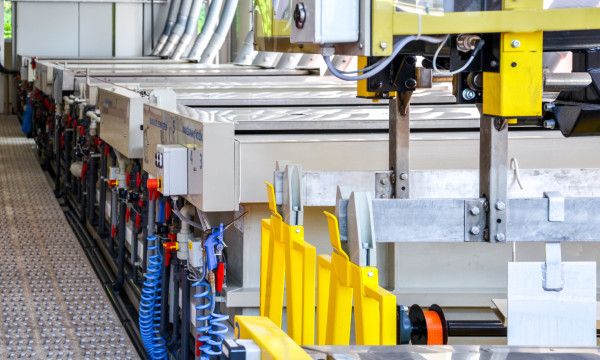
Hard anodizing, also known as hard anod, is an electrolytic process used to create a tough oxide layer on the surface of components. Hard anodizing is primarily performed on aluminum alloys. The thickness and coloration of the layer depend on the base aluminum alloy and the operating conditions of the hard anodizing process. The resulting oxide layer improves the functional properties of the substrate alloy, mainly increasing its mechanical properties such as hardness and wear resistance, but also enhancing corrosion and thermal resistance.
Hard anodizing is environmentally friendly because the oxidation process enhances the natural oxidation of aluminum, thereby not producing heavy metals or other harmful and dangerous by-products. Bomex operates a hard anodizing technology using a sulfuric acid solution.
technologie

Technical Parameters

  • High hardness ranging from 300 to 600 HV
  • Excellent wear resistance 
  • Increased corrosion resistance
  • Electrical resistivity 
  • Thermal resistance up to 2000°C.

  • General properties

  • The oxide layer is not applied to the substrate as in plating or coating, but instead grows into and simultaneously out of the base material, meaning it is integrated directly into the substrate. The formed thin oxide layer is regularly porous, which can be utilized for subsequent coloring. Hard anodizing in sulfuric acid is primarily used in applications that require excellent mechanical properties, as well as chemical and thermal stability. It complies with standards ISO 10074, EN 2536, BS 5599, MIL-A-8625, AMS 2468, AMS 2469, ASTM B580.
  • Layers

  • 5 – 100 µm
  • Dimensions of the parts

  • Length: 2 m
  • Weight: 650 kg

Base Materials

Aluminum and its alloys
Advantages of the Technology

    • High hardness A significant advantage of hard anodizing is the hardness of the resulting surface, which depends on the specific alloy and the method of anodizing.

    • Excellent wear resistance The wear resistance of hard anodized surfaces is comparable to tool steel or hard chrome, approximately ten times higher than that of standard anodizing. 

    • Electrochemical stability The inertness of the hard anodized surface ensures resistance to corrosion, long-term durability, and color stability.

    • Thermal resistance Hard anodized parts are used in demanding applications such as iron plates or surfaces of kitchen pans.

How Do We Work?

1

Submit an Inquiry

Whether you are from Prague, Brno, Vsetín, or Bratislava, you just need to fill out the inquiry form, or alternatively, call us or send an order for metal surface treatment to BOMEX via email.

2

Order Registration

We will register your order at BOMEX and send you a confirmation via email. If it's an individual solution for metal surface treatment, our colleagues will contact you for further info.

3

Expert Consultation

Based on our extensive experience, we will propose an optimal solution tailored specifically to your order in the field of metal surface treatment.

4

Order Processing

Your parts get processed according to the selected surface treatment.

5

Parts Inspection

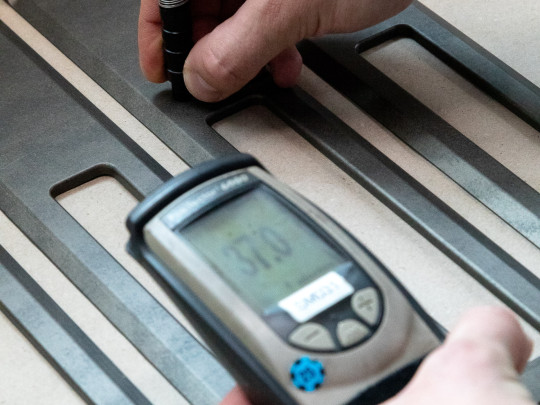
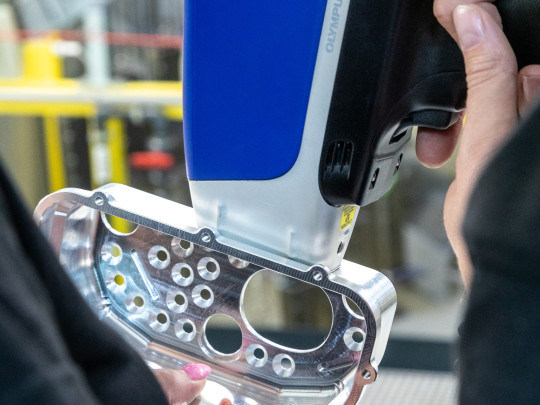
The output inspection will reveal any imperfections in the coating – in addition to visual inspection, we use measuring instruments to determine layer thickness, possible porosity, adhesion etc.

6

Shipment

We will contact you, the customer, who can pick up the parts at our location in Vsetín, or we can arrange packaging and direct delivery to you.

Do you have a question for BOMEX?

Write us, and we will get back to you by the next working day.

Contact us via form or write us.